


You earn a great income. You’ve saved diligently. You’re successful by almost every measure.
So why do you still feel uncertain about your financial life?
You’re not alone, and you’re not crazy. Many high-earning professionals in their 50s feel like something is “off.” That tension between success and satisfaction is real. At Purple Wealth, we’ve spent years helping people unpack what that tension really means, and more importantly, what to do about it.
The Emotional Tension of Success
As your income grows, so does the complexity of your life. The irony? More money often means more pressure, not more peace. According to research from the National Endowment for Financial Education, nearly 70% of people who suddenly come into wealth report feeling overwhelmed, anxious, or isolated.
Even if your wealth has grown steadily, not suddenly, you may still feel:
- Pulled in too many directions
- Unsure about when to stop working
- Afraid of making a mistake that could unravel what you’ve built
Success doesn’t eliminate stress. In fact, it often introduces a new version of it.
The 3 Real Questions That Keep You Up at Night
Whether or not you say it out loud, these are the questions that echo in the minds of many professionals in their 50s:
- Am I okay?
You want to know, not guess, if you're on solid financial ground. - Can I live the life I want?
You don’t just want to retire. You want to live well and spend on what matters, without guilt or second-guessing. - What am I missing?
You know there are blind spots. You just don’t know what they are.
These are not investment questions. These are life questions that require more than a spreadsheet.
Why a Statement Won’t Give You Peace
Your net worth can’t answer these questions. Neither can your latest quarterly statement. Traditional financial planning focuses on accumulation, not alignment. But you don’t just want more, you want clarity, confidence, and control.
That doesn’t come from a balance sheet. It comes from a deeper conversation.
Enter: The Better Conversations Exercise™
At Purple Wealth, we’ve developed a powerful experience to help you uncover what really matters about money in your life.
Here’s how it works:
- Identify Your Top 5 Priorities – You’ll choose from 15 value-based “statements” and rank what matters most to you about money (e.g., protecting your family, spending time with loved ones, supporting causes, preparing for the unexpected).
- Score How You’re Doing – For each priority, we ask: How do you feel about this area of your life today? You’ll rate your current experience so we can track how things improve over time.
Build a Plan Around What Matters – Your financial strategy is built around improving life, not just growing accounts. We seek to help you make smart, satisfying trade-offs that align your money with your values.
Uncover your most important priorities.
This isn’t a one-time discovery call. It’s a living framework we revisit each year to pursue a plan that matches your evolving life.
Why This Works (When Traditional Planning Doesn’t)
- Because Money = Feelings.
As Eric Lee, Founder of Purple Wealth, puts it, “Most decisions are made with the heart, not the brain.” Our industry treats money like math, but we know it’s emotional. We strive to bring clarity when your feelings create fog. - Because Simplicity Creates Confidence.
Most professionals have a messy financial “junk drawer”, layers of accounts, outdated insurance, old estate docs, and unanswered questions. We aim to help you organize and simplify it all. - Because Your Life is Not a Spreadsheet.
We don't just analyze. We listen, ask better questions, and provide guidance to help you live more intentionally.
Our Goal: Clarity, Confidence, and Calm
You’ll walk away with:
✅ A better understanding of what “enough” looks like
✅ Permission to live and give without guilt
✅ A plan grounded in purpose, not products
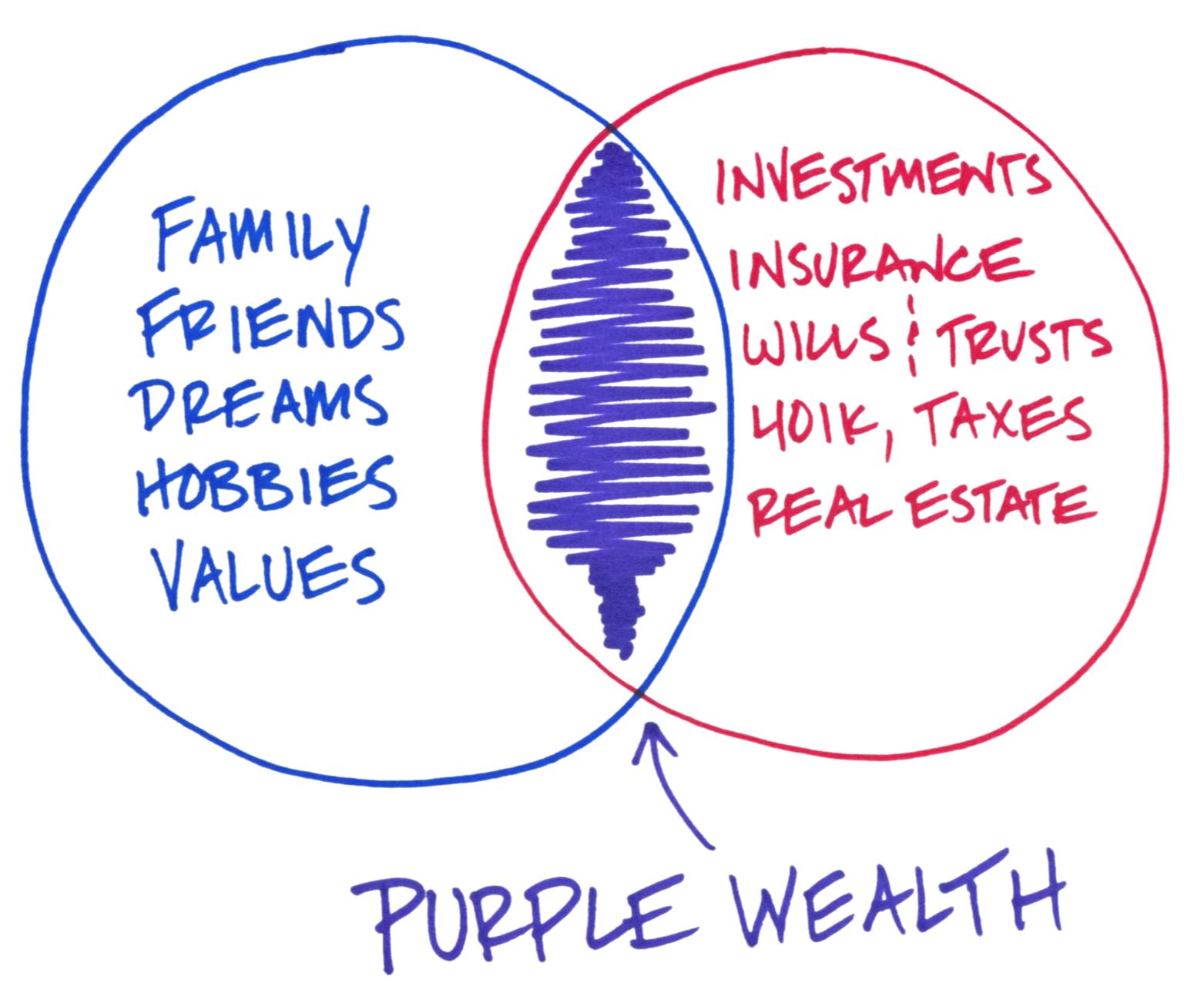
This is what we call Purple Wealth, when your financial life feels clear, in order, and aligned with your deepest priorities.
Common Questions We Help Answer:
- “How much money is enough to retire early if I’m 55?”
- “Can I afford to work less in my 50s?”
- “Should I downsize or keep my home after 50?”
- “How do I align financial decisions with my values?”
- “Is it okay to spend more now instead of saving more?”
Final Thought
If you're in your 50s and still wondering, "Am I okay?", "Can I live the life I want?" or "What am I missing?", you don’t need a bigger portfolio, you need more clarity .
Let’s redefine what financial planning looks like for your life, not just your money.